The English version
For further information and to contact the author: info@polegri.net
The maze. Each page features a circular maze drawn as a large ornament. Inside, the path winds through the maze, and at the points where the path ends or branches off, letters are printed (A, B, C, D…).
The icons. Around the maze, just outside the decorated border, there are small drawn icons (for example, a sun, a tree, an owl, an hourglass, a flame, a hand, the moon…). Each icon represents an idea or a word related to the poem’s theme.
How to Play. The reader follows the path of the maze with their eyes (or with a pen, as shown in the photo of the book), starting from an outer icon and ending at a letter inside. Only some paths are “correct”: by following them, you discover which letter each icon leads to. In this way, you find four hidden letters—those correctly linked to four icons.
From the letter to the word. Each letter found is associated with a specific icon, and that icon indicates a word (the drawing itself suggests what it is: the sun suggests “sun,” the owl suggests “owl,” and so on).
Complete the poem. Below the maze is the text of the poem with four blank spaces (marked by dots). The four words found by following the maze must be inserted, one by one, into these blank spaces. Once the text is complete, the poem takes on its full meaning and reveals its hidden significance.
In short: you follow the maze to connect the icon and the letter; from the letter, you trace back to the word; and the words fill in the blank spaces of the poem, completing it.

ORBITA I – Of Labyrinths in Memory is an illustrated work that combines symbolic literature, poetic imagination, and interactive experience.
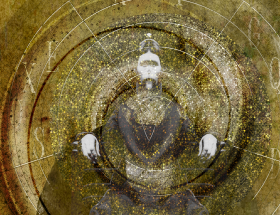
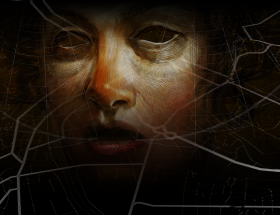
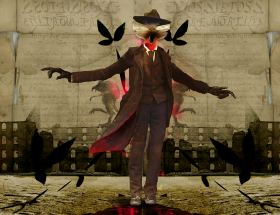
Through fifty poems and fifty original labyrinths, the reader is invited to follow the path of the Lar, a guiding figure on a pilgrimage between memory and oblivion, myth and identity, presence and transformation.
Each text features missing words that can be recovered by navigating the corresponding labyrinth. The letters encountered along the way enable the reader to reconstruct the lost meaning, transforming the act of reading into an experience of active participation.
Amidst imaginary cities, symbolic animals, archetypes, and landscapes of memory, the volume offers a journey marked by four movements:
- The Threshold
- The Descent
- The Transformation
- The Return
ORBITA I is not merely a book to be read, but a journey to be undertaken, where every labyrinth holds a story and every story conceals a memory to be reconstructed.
A book to be read.
A labyrinth to be traversed.
A memory to be reconstructed.
For further information and to contact the author: info@polegri.net